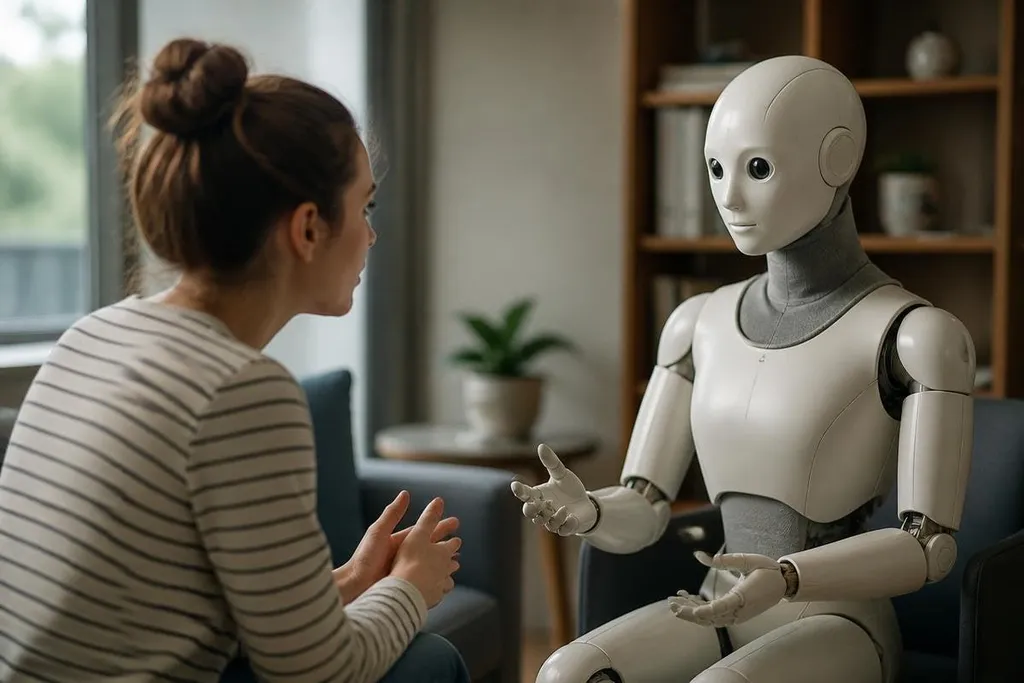
A robot can smile, pause before answering, lower its voice, and turn its head toward a speaker. Those actions may make a system easier to use, but they can also make people treat software as if it cares.
- A robot can copy signs of emotion without feeling anything.
- Human-like behavior can affect trust, consent, and personal data.
- Designers should state what the robot is and what it cannot do.
What emotional mimicry changes
A machine that moves a face or changes its voice sends social signals. People use those signals to judge attention, comfort, fear, and honesty in daily life. A robot can copy the signals without having an inner experience behind them.
That gap matters most when the person using the robot has little reason to question it. A child may treat a smiling tutor as a friend. An older person may speak to a care robot about private worries. A customer may accept a soft voice as proof that the system understands their problem.
The machine does not need to lie in words to mislead someone. Its face, timing, and tone can create a false sense of care.
The ethical question is not only whether the robot gives a correct answer. It is also whether its design causes people to place more trust in that answer than the system has earned.
Trust needs a clear boundary
Trust in a robot should relate to what it can do. A delivery robot may be trusted to follow a route. A medical support system may be trusted to sort information under set rules. Neither type should suggest that it feels concern or keeps a personal bond.
This calls for clear signals about the machine’s nature. A spoken notice at the start of a session may help, but one notice cannot cover every later interaction. The robot’s voice, face, name, and reply style all shape the user’s view of it.
When a robot’s voice and face suggest fear or care, a dated report from Robot 24 can place those cues beside the maker’s stated limits. That gives you a way to check whether the product explains its emotional behavior or leaves people to guess. Those cues also raise a second question: what does the robot remember after the conversation ends?
Designers also need a rule for memory. If a robot stores a person’s fears, habits, or family details, that record can affect future replies. The user should know what gets stored, why it is stored, and how to remove it.
Where the risk is highest
The setting changes the duty of care. A museum robot using a playful voice presents one kind of concern. A system used in a classroom, hospital, home, or workplace carries more weight because people may depend on its guidance or feel pressure to respond.
The risk rises when the robot has access to private speech, controls a physical device, or speaks to someone who may struggle to judge its limits. A human-like face can make a warning easier to hear, but it can also hide uncertainty behind a calm expression.
I’d keep emotional mimicry narrow: use it to make commands clear or reduce confusion, while avoiding claims or signals of affection, loyalty, grief, or personal concern.
The strongest opposing view is that social cues can help people work with machines. That can be true. A pause can show that the robot is processing speech, and a change in tone can mark a warning. The design still needs to separate useful signals from claims of inner feeling.
A practical design check
Before a robot that mimics emotion reaches users, its maker should check:
- State the limit: tell people that the robot produces social signals and does not feel emotion.
- Match the setting: use less human-like behavior in care, school, and high-stakes work.
- Protect private speech: list stored data, its purpose, and the deletion process.
- Test user belief: ask whether people think the robot cares, remembers, or understands more than it does.
- Add human review: give users a clear route to a person when advice affects health, safety, money, or rights.
These checks work best when tested with the people who will use the robot, not only with engineers. A design that seems harmless in a lab may feel personal in a home or classroom.
What should happen next
Robot makers should publish plain descriptions of emotional behaviors before deployment. They should name the signals the system copies, the data it keeps, and the decisions that still require a person.
That leaves a workable line: robots may communicate in ways people can read, but they should not use human-like emotion to claim a relationship they cannot have. The next test is simple: can a user tell what the robot feels, what it knows, and what it is only imitating?